In the corporate world, progress is rarely accidental. It is designed, measured, corrected, and refined by people trained to think in systems. In Pakistan, few institutions have shaped this discipline as consistently as the Institute of Cost and Management Accountants of Pakistan (ICMA Pakistan).
Its graduates, known as Chartered Management Accountants, serve as custodians of strategic clarity. They translate complexity into informed decisions, transform raw data into direction, and convert risk into long-term resilience. Their influence defines how organizations sustain growth and stability in uncertain environments.
Yet beyond balance sheets and boardrooms lies a deeper truth that often goes unnoticed. The principles that keep an organization financially healthy are the very same principles that keep a human being physically healthy. This is not a metaphor but a structural reality.
At FitwellHub, where the focus lies on understanding behavioural patterns, risk exposure, and long-term resilience in health, this connection has become increasingly clear. The framework taught by ICMA Pakistan—discipline, measurement, accountability, and strategic review—mirrors the blueprint required for sustainable well-being.
When examined closely, management accounting and health management follow the same operational rhythm. Both depend on planning before action, on recording to create visibility, on tracking to identify trends, and on regular review to guide adjustment.
In the professional world, no Chartered Management Accountant operates without budgets and forecasts. Every decision is rooted in foresight. Health functions in the same way. A life without a health plan drifts just as a business without a budget does—slowly at first, then suddenly. Nutrition, movement, rest, and preventive care all demand intentional planning if outcomes are to remain stable over time.
In accounting, accurate records form the backbone of trust and transparency. Without reliable ledgers, financial statements lose their meaning. Health follows the same rule. Consistent records of diet, sleep, medical history, and daily habits provide the clarity needed for informed decisions. What remains unrecorded gradually becomes invisible, and what becomes invisible cannot be effectively managed.
Tracking performance is another shared discipline. Businesses rely on indicators and variance analysis to detect early warning signs and measure progress. The human body operates no differently. Heart rate, glucose levels, physical activity, stress, and recovery patterns all function as human performance indicators. They reveal risk long before a crisis emerges, provided they are observed with consistency.
The real value of management accounting appears after the numbers are produced, through analysis, interpretation, and course correction. Health requires the same commitment to reflection. Without review, even the most well-designed plan becomes outdated. Without adjustment, gradual drift turns into long-term decline. Sustainable health, like sustainable business, depends on continuous evaluation.
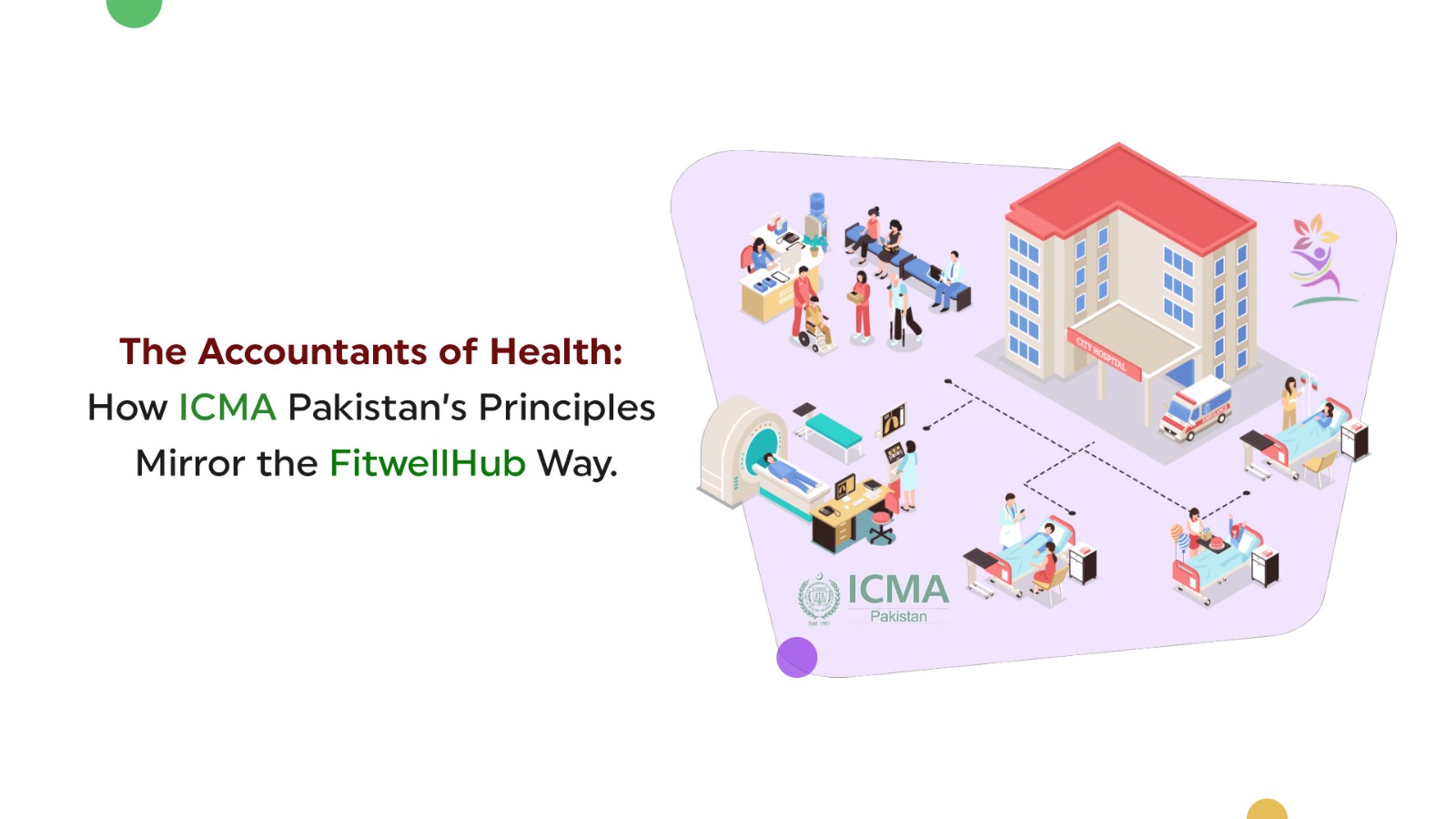
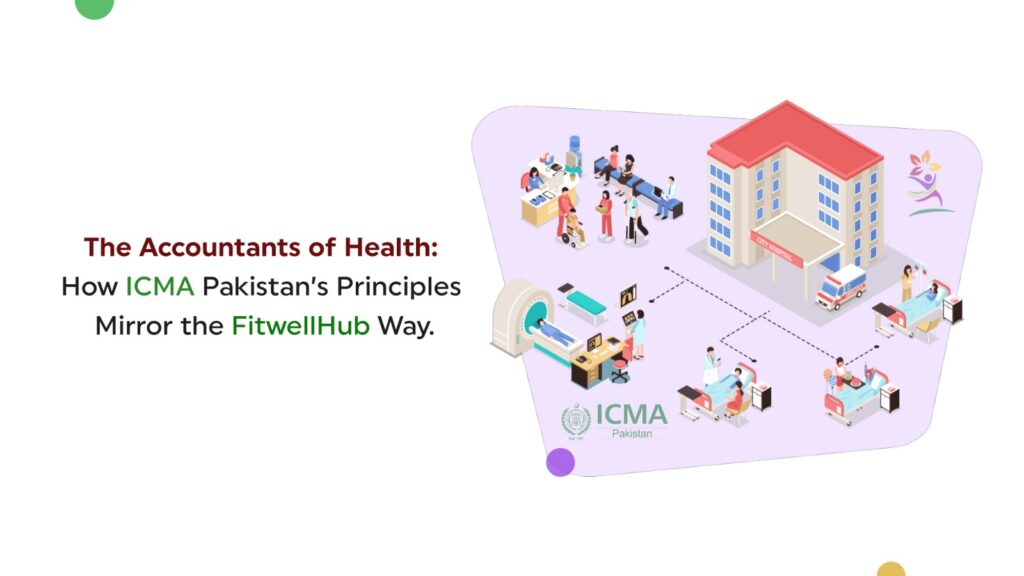
There is also a striking structural similarity in how both systems manage complexity. ICMA Pakistan trains professionals to oversee distributed operations through central intelligence, a model often described as hub-and-spoke thinking. A strong core guides decentralized execution. Modern healthcare systems increasingly follow the same logic, where centralized health intelligence supports a network of clinics, specialists, coaches, and digital tools. Both structures exist because complexity demands coherence rather than chaos.
ICMA Pakistan’s national presence reflects more than geographic reach. Its campuses across major cities represent an investment in institutional discipline, analytical clarity, and strategic capability. This intellectual infrastructure strengthens the country’s economic framework, but its influence extends far beyond business. The skills it nurtures are applicable wherever structure and accountability are required, including personal health management.
The broader insight that emerges from this comparison is simple yet profound. Good management is not confined to business; it is a life skill. Health fails for the same reasons organizations fail—lack of planning, lack of tracking, lack of review, and lack of accountability. Health succeeds for the same reasons organizations succeed—discipline, measurement, foresight, and continuous adjustment.
ICMA Pakistan has spent decades shaping professionals who understand how to manage complexity with intent and structure. When this same mindset is applied to personal habits, daily choices, and long-term well-being, the impact extends far beyond financial performance. It reframes health not as a reactive response to crisis, but as a strategic responsibility deserving of the same rigour we expect in corporate life.